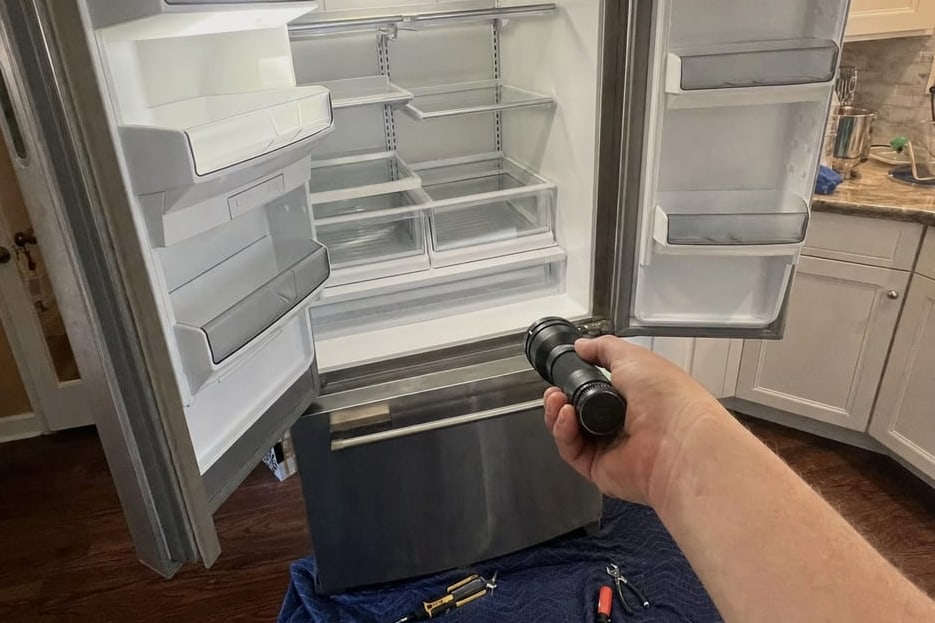
A fridge making loud noise is doing one of 2 things: running a normal cycle (compressor hum, refrigerant gurgle, relay clicks, defrost sizzle) or warning that a fan, the compressor, the ice maker or the water valve has a fault. To tell them apart, ask whether the sound is new, constant, or arriving with temperatures above the 38°F fresh-food and 0°F freezer settings Sub-Zero recommends.
This guide covers built-in Sub-Zero, Thermador, Viking and Monogram refrigeration, where the machinery sits behind a grille and sound carries through cabinetry, and it separates owner checks from problems that need a technician.
What Normal Refrigerator Noise Sounds Like
A healthy Sub-Zero built-in refrigerator is rarely silent, and 5 sounds belong to everyday operation. The first is a low, steady compressor hum; many newer Sub-Zero models use variable-speed compressors that run long stretches at low speed, so a quiet all-day hum is expected. The second is a gurgle as refrigerant moves through the evaporator tubing, usually right after the compressor starts or stops.
The third normal Sub-Zero sound is a soft click from control board relays switching the compressor, fans and defrost heater. The fourth is a pop or crack as the plastic liner expands and contracts during defrost. The fifth is a sizzle as meltwater drips onto the warm defrost heater.
Every normal Sub-Zero refrigerator sound follows one pattern: it comes and goes with the cooling cycle, repeats at a similar volume, and food stays at the set temperature. A sound that grows louder, changes pitch or never stops deserves a closer look.
How Do You Find Which Part Is Making the Noise?
Locating a Sub-Zero refrigerator noise takes about 10 minutes and no tools.
Step 1: note where the sound comes from. Most full-size built-in Sub-Zero units keep the compressor, condenser and condenser fan behind the top grille; undercounter models put them behind the toe-kick. A sound behind a compartment's rear panel points at its evaporator fan or, in the freezer, the ice maker.
Step 2: open the door. On most refrigerators the evaporator fan pauses when the door opens, so a Sub-Zero noise that stops with the door open comes from that fan.
Step 3: time the sound. A Sub-Zero noise only at compressor start points at the compressor or its mounts; a noise with each ice cycle points at the ice maker or water valve; a nonstop noise points at a fan.
Step 4: check temperatures. A Sub-Zero holding near 38°F and 0°F has a mechanical noise, not yet a cooling failure.
Step 5: make sure nothing sits on top of the Sub-Zero unit, presses against the grille, or rubs the door panels.
Fan Noises: Squealing, Chirping, Ticking or Scraping
A Sub-Zero built-in has at least 2 fans: the evaporator fan that circulates cold air inside the cabinet and the condenser fan that cools the machinery behind the grille.
A squeal, chirp or whine from inside the compartment that stops when the door opens usually means worn Sub-Zero evaporator fan motor bearings. Once that motor seizes, the compartment warms, so plan the replacement early.
A tick or scrape from the same spot means the Sub-Zero evaporator fan blade is hitting ice. Ice on the fan is a symptom: the defrost system (heater, sensor or control) is not clearing the evaporator coil, or a torn door gasket is letting humid air in. Melting the ice buys a few quiet days, but the ticking returns until that fault is repaired.
A rattle or roar from the top grille points at the Sub-Zero condenser fan. Dust on the condenser coil makes the fan and compressor run longer and louder; Sub-Zero recommends cleaning the condenser about every 6 months. A loose blade or worn condenser fan motor grinds and needs a part.
Is a Loud Compressor a Sign of Failure?
A loud Sub-Zero compressor is not automatically a failing one. The compressor runs harder for up to 24 hours after a power outage, a long door-open period or a large grocery load, and hums more steadily on hot days, settling once the cabinet returns to its set temperature.
Three Sub-Zero compressor sounds are not normal. A heavy knock as the compressor starts or stops often points at worn mounting grommets or an internal mount problem. A repeating buzz, click and silence every few minutes means the overload protector is cutting off a compressor that cannot start, because of a failed start relay or the compressor itself; the cabinet usually warms within hours. A continuous metallic clatter with rising temperatures signals internal compressor wear.
The Sub-Zero compressor belongs to the sealed system, and work beyond the external start components requires refrigerant handling by a technician holding EPA Section 608 certification. Owners should stop at unplugging the unit and vacuuming the condenser.
Why Does the Ice Maker Buzz, Bang or Grind?
Several Sub-Zero ice maker sounds are normal: the water valve buzzes for a few seconds during each fill, and cubes clatter into the bin after each harvest; both stop once the bin is full.
A Sub-Zero water valve buzz that runs far longer than a normal fill, or repeats with no new ice, means water is not arriving: a closed supply valve, a kinked line, a clogged filter or low water pressure. If the supply is off, switch the Sub-Zero ice maker off at the control so the valve does not buzz against a dry line.
A bang in the wall as the Sub-Zero fill valve closes is water hammer, a plumbing issue a plumber can fix with an arrestor near the supply line.
Grinding or repeated clicking from the Sub-Zero ice maker head, with cubes stuck in the mold, points at a jam or a failing ice maker motor. Clearing a jam with the ice maker off is a safe owner step; a module that keeps grinding afterward needs replacement.
When Should You Call a Technician for Refrigerator Noise?
Owners can safely handle the first Sub-Zero noise checks: vacuum the condenser, clear anything touching the grille, re-seat the ice bin, open the water supply and replace a clogged filter. If that silences the Sub-Zero refrigerator and temperatures hold near 38°F and 0°F, no visit is needed.
Book a technician when a Sub-Zero noise arrives with rising temperatures, when the compressor repeats the buzz-click-silence pattern, when ice keeps returning to the evaporator fan, when a fan squeal turns constant, or when the unit needs releveling in its cabinetry. The same boundary applies to Thermador, Viking and Monogram built-in refrigerators and wine columns.
House Services 24/7 repairs Sub-Zero refrigeration in Santa Clara, Sunnyvale, Cupertino, Mountain View, Campbell, Los Gatos, Saratoga and Palo Alto. A visit starts with an $89 service call that is waived when you approve the repair.